Yosemite Valley rewards a small collection of viewpoints with time between them. These four stops offer different ways to photograph the same landscape: a wide introduction, a meadow walk, a river reflection and a final view upstream. Timing and framing suggestions here are editorial choices; clouds, season and water levels shape the result.

Best for travelers who want recognizable Yosemite views and room to experiment without planning a strenuous summit hike.
Tunnel View: start with the whole valley
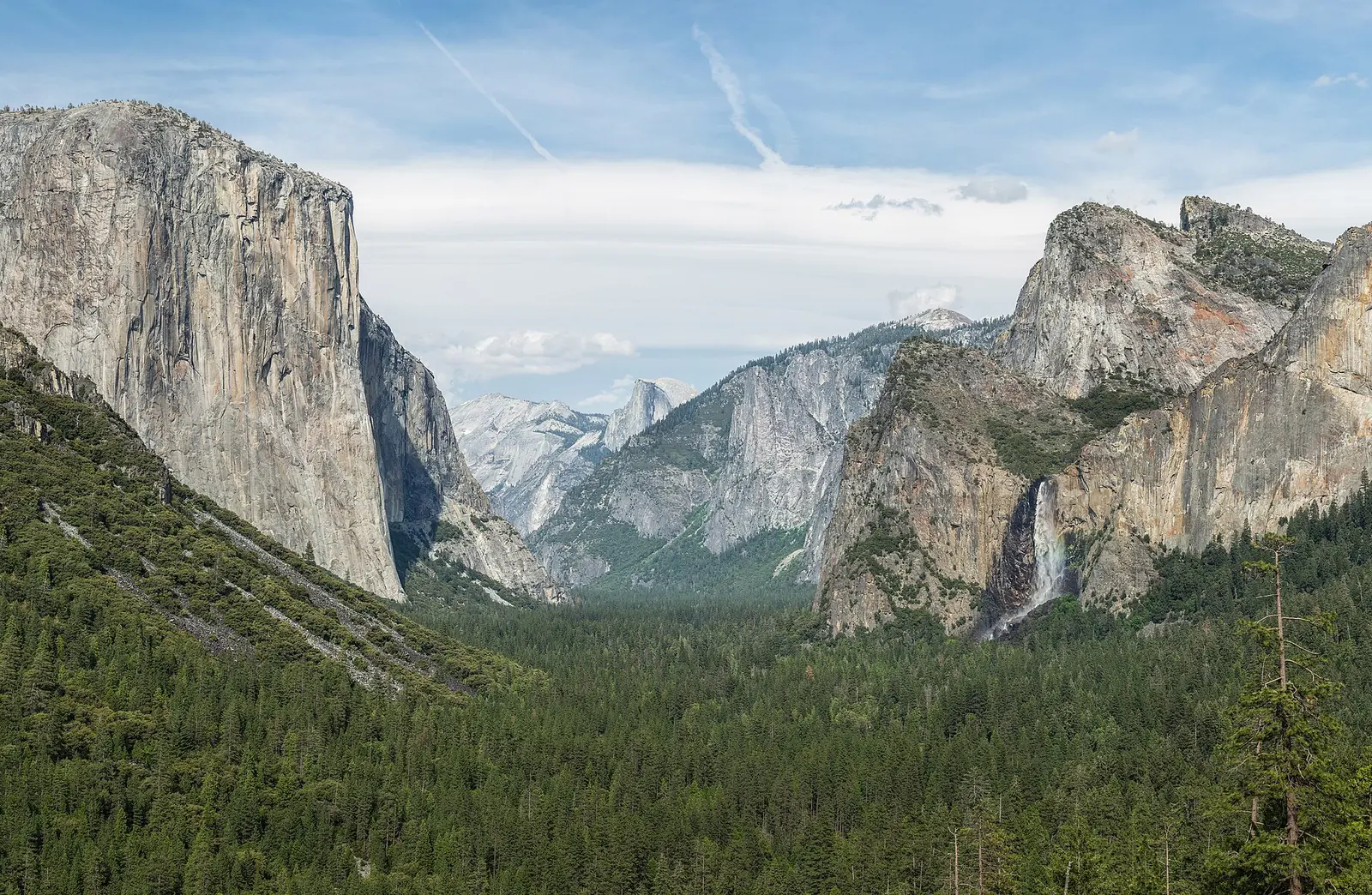
Tunnel View sits at the eastern end of Wawona Tunnel on Wawona Road, also called Highway 41. From the developed overlook, El Capitan and Bridalveil Fall frame the valley with Half Dome farther away. Try a wide horizontal frame first, then zoom toward one cliff instead of filling every photograph with everything.
Choose an early visit if a quieter setup matters most; later light is an option when your arrival route fits. Neither gives a guaranteed empty overlook or glowing sky. Use designated parking and viewing space, and keep the roadway clear. This is a separate road stop, not part of the meadow walking loop.
Cook’s Meadow: let the foreground tell the story
The NPS describes Cook’s Meadow as a flat, one-mile loop, with Yosemite Village and Yosemite Falls among the nearby parking options. A boardwalk or path can guide the eye toward the cliffs; leave room for meadow texture instead of aiming only upward. Stay on the established route rather than stepping into vegetation for a cleaner angle.
Try this walk when you have time to pause, not just a few spare minutes between drives. The NPS walking estimate excludes your photography stops. Wet boards, frost and snow can change the footing. Under a flat sky, concentrate on tree shapes and details that do not depend on a colorful horizon.
Sentinel Bridge: watch the water before the clock
Add Sentinel Bridge from the Cook’s Meadow route for the familiar Half Dome view along the Merced River. If the surface is calm, try placing the waterline near the middle of the frame; if it is rippled, make the moving river the foreground instead. Late-day light is worth considering when conditions and your return plans allow.
The bridge is a shared crossing. Keep the walking route open, especially when using a tripod, and accept a different position when others are already photographing. Nearby parking is limited; walking from your existing Valley parking space can save another search.
Valley View: make it an exit stop
Valley View is on one-way Northside Drive just before Pohono Bridge, making it a logical stop while leaving the Valley. Here the river provides a lower perspective than Tunnel View. Try a vertical composition with water in front and cliffs above, or crop tightly around the meeting of rock and trees.
Stop only if legal parking is available. Keep the camera position on stable ground; a reflection is not a reason to move onto slippery rocks or into the river. If this stop is busy, let your meadow and bridge photographs be the day’s collection.
Build the route around parking, not four deadlines
For 2026, Yosemite is not using a timed entrance reservation system. That does not reserve a parking space. NPS traffic guidance recommends leaving a parked car in place and walking or using the free Valley shuttle; busy buses can require a wait. Check the current shuttle map before assigning a stop to a route.
Treat Tunnel View as an arrival or departure option, pair Cook’s Meadow with Sentinel Bridge, and consider Valley View on the way out. Recheck road and weather conditions before leaving. If visibility is poor, shorten the plan to one walk rather than racing between overlooks.
Explore the parks in this guide
Official sources & trip checks
NPS: Yosemite viewpoints and road locations ↗NPS: Cook’s Meadow distance, access and trail care ↗NPS: Yosemite traffic and parking guidance ↗NPS: Yosemite public transportation ↗NPS: 2026 entrance reservation policy ↗NPS: Current Yosemite conditions ↗Sources checked October 23, 2026. Independently researched by Parkly; not a firsthand trip report. Route order, light preferences and pace are editorial suggestions. Check official conditions for your travel dates.
How we make recommendations ↗