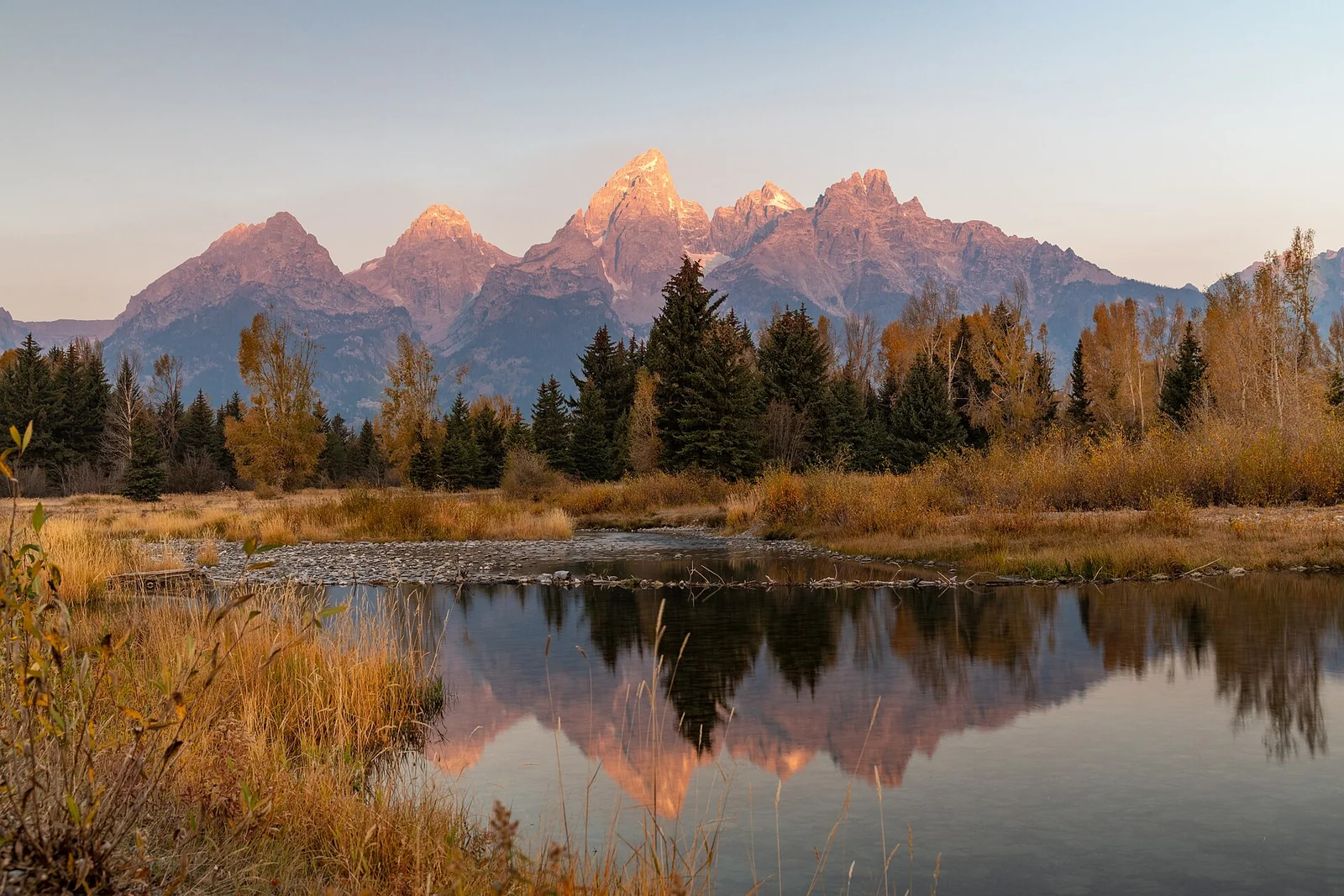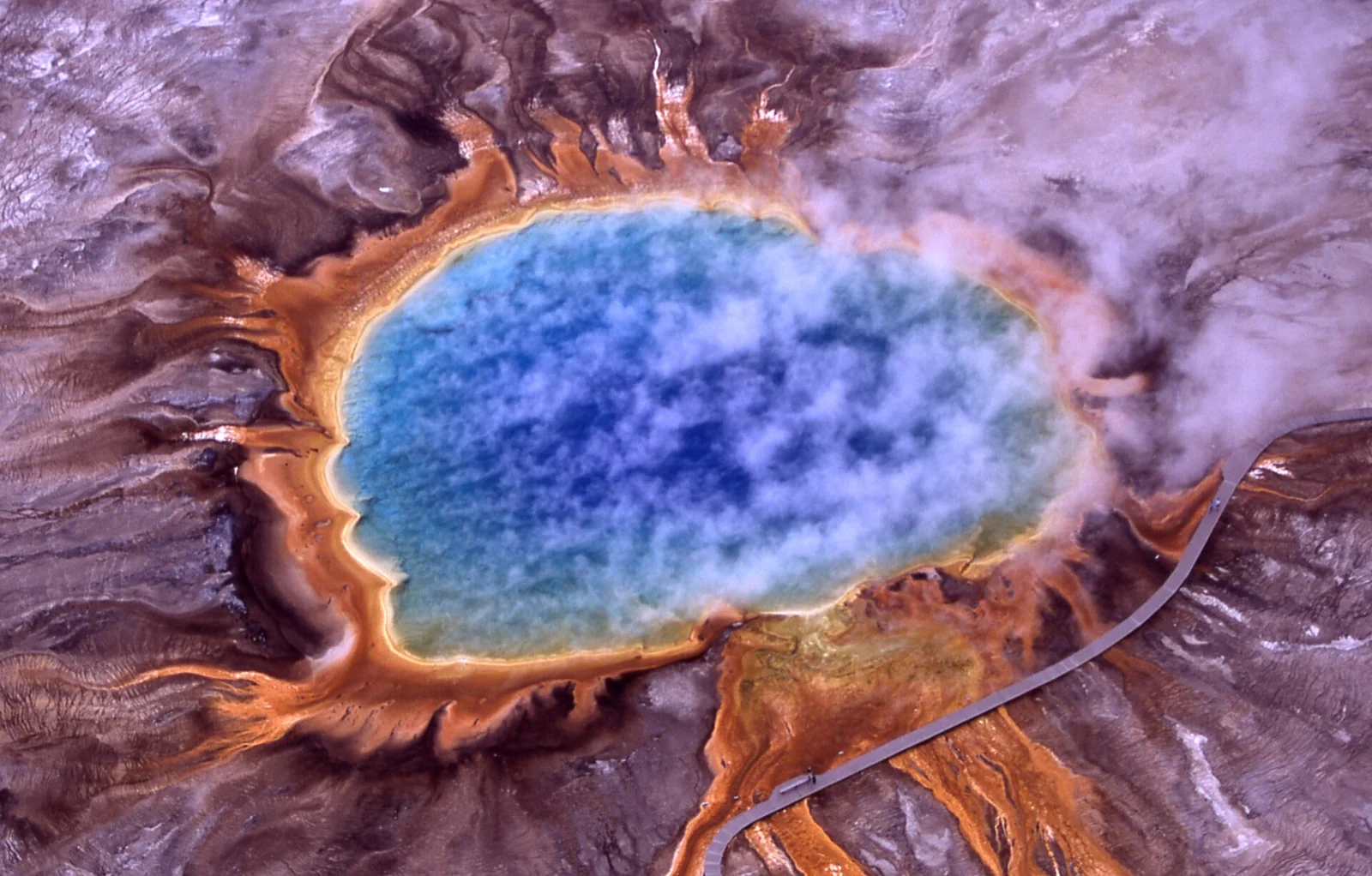
Give Yellowstone more time if geysers, colorful thermal areas and a wide variety of stops are your priorities. Give Grand Teton more time if you want mountain scenery, lakes and longer pauses in one area. With only one or two full days, choose a focused visit; a combined trip works better when both parks get their own days.

For travelers deciding how to divide a first visit to these neighboring parks. The suggested allocation is an editorial starting point for the normal road-travel season, not a minimum required stay.
Which scene would you happily wait for?
Imagine two afternoons. In one, you are waiting for a geyser, then walking among several very different thermal features. In the other, you are sitting beside a lake before deciding whether to keep walking toward the mountains. If the first sounds exciting, make Yellowstone the anchor. If the second sounds like the holiday you need, protect time in Grand Teton.
Both parks offer hiking and wildlife. The more useful question is whether you enjoy moving between distinct attractions or exploring one mountain-and-lake setting in depth. Ask each person to choose one experience they would regret missing, then compare those choices with the actual map.
What a Yellowstone day feels like
At Old Faithful, check the current eruption prediction rather than building the day around a fixed interval. The prediction is an estimate, and visitor-center or app information may be unavailable in service gaps. Pair the viewing area with an unhurried section of the Upper Geyser Basin boardwalks. That gives the visit substance even if you wait longer than expected.
On another day, the Grand Canyon of the Yellowstone offers a different focus. Artist Point looks toward the Lower Falls; other rim viewpoints change the angle and walking commitment. Choose a few views instead of treating every turnout as mandatory. The basin and canyon are separate outings with road time between them, not adjacent stops you can casually connect on foot.
Thermal areas require staying on designated boardwalks and trails. The ground around hot springs is not a place to explore for a better angle. Yellowstone is a good fit when you enjoy observing unfamiliar processes and reading the landscape, with patience for parking, driving and occasional delays between the highlights.
What a Grand Teton day feels like
Jenny Lake lets you decide how much of the day to spend walking. The paved Discovery Trail provides access to the lakeshore; longer trails and the seasonal shuttle boat open different possibilities. A boat ride can shorten the approach to west-side hikes, but it does not remove their climbing or the need to meet the last return. Check the service calendar before including it.
Oxbow Bend offers another way to spend time with the range: the Snake River bend and Mount Moran share the view, sometimes with reflections. Wind, cloud and water conditions decide what you see. Make a pause there for the landscape itself rather than promising the group a mirror-like photograph or a particular animal.
Our preference for a mountain-focused visit is one main lake outing and one shorter scenic stop per day. That leaves room to return to a view in different weather. It is a pacing suggestion, not a claim that Grand Teton is uncrowded; Jenny Lake is popular and its parking can fill.
If you have one or two full days, choose a priority
For one day, choose the park nearest a practical overnight base that also matches your main interest. A full Yellowstone day spent in one region can be more satisfying than a long sweep through both parks. A full Grand Teton day can include a proper lake pause instead of a photograph from the roadside on the way elsewhere.
For two days, our starting recommendation is to stay with the same park unless the transfer itself fits your arrival and departure route. In Yellowstone, separate the thermal and canyon priorities. In Grand Teton, let a lake day and a second, flexible day stand on their own. Check each lodging location against the places you chose; the name of the nearest town is not enough to estimate your day.
A five-day starting point for visiting both
With five full sightseeing days in the normal road season, try three Yellowstone days and two Grand Teton days. Give Yellowstone a thermal day, a canyon-focused day and a flexible day for another region or a return visit. Give Grand Teton a lake day and a second mountain-view or hiking day. Reverse the balance if walking in the Tetons is the main reason for traveling.
Move bases once where practical. Treat the transfer as a lighter day with one optional stop, not a full sightseeing day in both parks. Yellowstone’s road status controls whether the South Entrance connection is usable. Do not translate the parks’ proximity on a map into a promise of a short journey between your particular lodges.
When the season changes the answer
Most Yellowstone roads close to ordinary vehicles in winter, while Grand Teton also has seasonal road closures and reduced services. A winter combination needs a different plan, potentially including authorized oversnow travel in Yellowstone. Check both road maps before booking; an open highway beside Grand Teton does not mean you can continue through Yellowstone to Old Faithful.
Wildlife is a possibility in both parks, not an appointment. Use designated pullouts, leave animals room and follow each park’s distance rules. If a sighting changes the day, drop a later stop instead of speeding to recover the schedule. The best allocation leaves enough flexibility to enjoy what happens without relying on a guaranteed sighting.
Explore the parks in this guide
Official sources & trip checks
NPS: Old Faithful and eruption predictions ↗NPS: Yellowstone Canyon area ↗NPS: Jenny Lake planning ↗NPS: Oxbow Bend Turnout ↗NPS: Yellowstone road status ↗NPS: Grand Teton roads ↗NPS: Yellowstone safety ↗Sources checked October 23, 2026. Independently researched by Parkly; not a firsthand trip report. Route order, light preferences and pace are editorial suggestions. Check official conditions for your travel dates.
How we make recommendations ↗