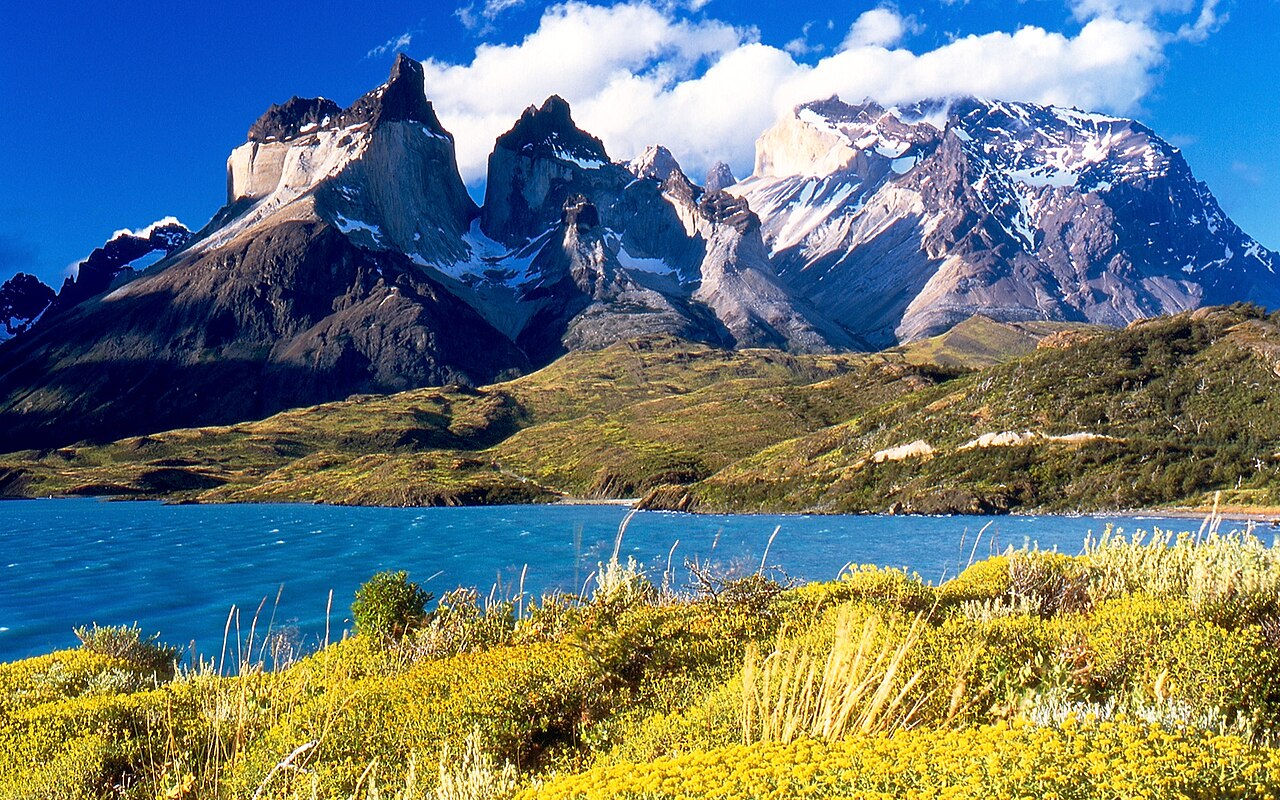
Choose a road-based visit if you want mountain and lake scenery with selected short walks. Choose the W Trek if consecutive walking days and remote overnight stops are the experience you want. Both are real ways to visit Torres del Paine; the important difference is the time, transport and reservations each requires.

This guide suits first-time Patagonia planners deciding how active their trip should be. A scenic day is not the Base Torres hike in disguise, and a park admission ticket alone does not organize a multiday trek.
Choose the shape of the trip first
For a scenic visit, think in viewpoints, short outings and a return to your booked lodging. You can spend your energy watching light move over a lake instead of carrying it up a long trail. An organized road tour can work particularly well when the group has different walking preferences, provided its actual stops and walking requirements suit everyone.
For the W, think in successive walking stages, overnight reservations and reaching a different end of the route. It is a trek rather than a collection of viewpoints you drive between. Decide whether you want several days shaped around walking before searching for individual beds. Otherwise, a tempting available room may pull you into an unsuitable itinerary.
Give a scenic day one clear route
Use Puerto Natales or confirmed park-area accommodation as a base, then choose a manageable road itinerary. Lake and steppe viewpoints give a different perspective from the famous towers close-up. Pick a few stops you care about and allow time for wind, clouds and wildlife observation from permitted places. Do not treat every marked attraction as a compulsory appointment.
The Salto Grande area is an option for a shorter walking stop near the road network. Check the open path and conditions before setting off; short distance does not cancel strong wind. Keep that outing separate from a demanding mountain hike. If the weather makes walking unsuitable, follow current access advice rather than improvising a different exposed route.
Solve the last connection, not just the first bus
Buses connect Puerto Natales with selected park access points, but this is not a sightseeing shuttle that drops you at every viewpoint whenever you wish. Verify the operating dates, stops and return departure that match your plan. A road tour or private transfer can be simpler for a scenic itinerary with several stops.
For trekking, draw the route from your accommodation to the first walking stage and from the final stage back to town. Include any connecting shuttle or lake crossing. Confirm each service independently and allow a margin between them. A reservation at a refuge does not mean that a boat or bus will wait for your arrival.
Book the W as one connected itinerary
Chile’s tourism guidance describes the W as a route with different starting and finishing points. Camps and refuges must be reserved in advance. Check the complete sequence of available nights before making nonrefundable commitments. If one essential night is missing, revise the route rather than assuming you can arrive and find space.
Consider what each booking actually provides: a bed, camping space, equipment or meals are different products. Match the walking stages to the least experienced member of the group and the equipment everyone can carry. Confirm current trail access and seasonal guide requirements with CONAF. A familiar route name does not guarantee that the summer rules apply to your dates.
Keep admission and weather checks separate
Purchase park admission through the official system linked by CONAF and check the product for your visit. Keep the proof accessible offline along with accommodation and transport confirmations. Admission, lodging and transport are separate parts of the plan. Treat completing all three as the start of preparation rather than a guarantee that every route will operate.
Patagonian wind and abrupt weather changes can affect trails and boat connections. CONAF has extended seasonal guide requirements when conditions warranted it, so a calendar date alone is not enough. Read current notices before departure and again locally. Carry appropriate layers and rain protection, follow marked trails and accept a shorter day when conditions call for one.
Leave enough time to enjoy the version you chose
A scenic day can introduce the park, while an additional day gives another chance at conditions and a different area. The W needs the complete number of walking and overnight days required by your booked route, plus the travel around it. Do not count an international arrival or a distant airport transfer as a usable park day.
Before finalizing, ask everyone to choose one thing they would be happy remembering: the lake color, a quiet viewpoint, a waterfall or several days on foot. Build around the common answer. Keep an alternative for conditions and an uncomplicated way back. The best first visit is the one whose demands leave enough attention for the place itself.
Explore the parks in this guide
Official sources & trip checks
CONAF: Torres del Paine official visitor information ↗Chile Travel: Torres del Paine ↗Chile Travel: Planning the W Trek ↗Chile es Tuyo: Salto Grande ↗Pases Parques: Official park admission ↗CONAF: Weather can extend guide requirements ↗Sources checked October 24, 2026. Independently researched by Parkly; not a firsthand trip report. Route order, light preferences and pace are editorial suggestions. Check official conditions for your travel dates.
How we make recommendations ↗