Acadia offers several distinct photographic moods within one trip, but a good plan leaves room for wind, fog and full parking lots. Choose one main scene and one alternative. The light and composition ideas below are editorial suggestions, with access details checked against National Park Service guidance.

Best for travelers who enjoy coastal photography and short, flexible outings, and who are willing to change a plan when conditions disagree.
Ocean Path: choose how much coast to walk
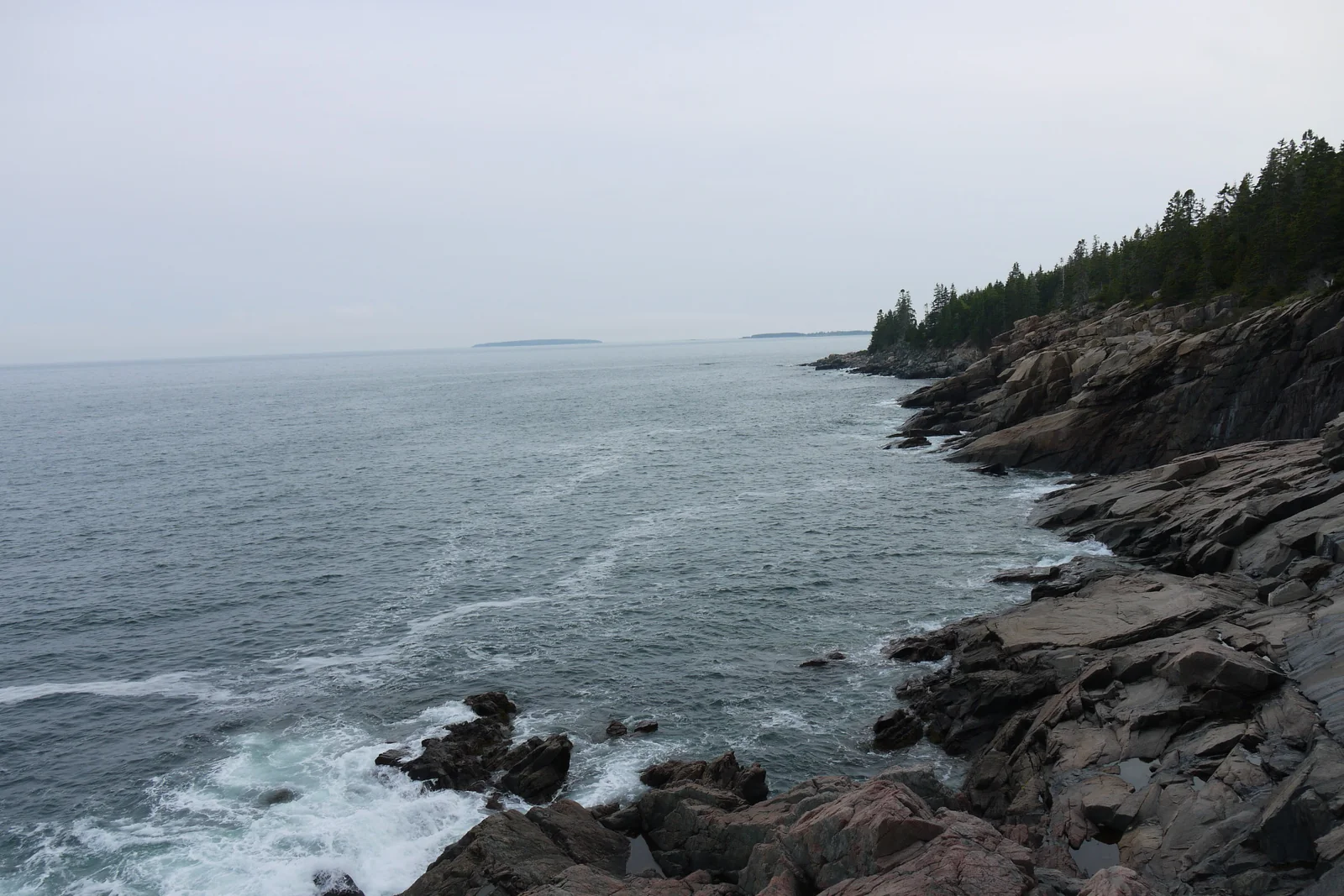
Start from the upper Sand Beach parking area and follow Ocean Path toward Thunder Hole. That section is about 0.7 miles one way; the full path is 2.2 miles each way. The first section has concrete and packed gravel, while the continuation toward Otter Point includes uneven ground and stairs.
Try an early visit for a sea-facing scene, using the curve of the shoreline to lead into the frame. A short out-and-back gives more time to notice rock shapes than a hurried full walk. Stay on secure ground, away from cliff edges and surf. Rough seas are a reason to step back, even when the photograph looks dramatic.
Jordan Pond: give the Bubbles some breathing room
From the pond’s southern end near Jordan Pond House, look north toward North and South Bubble. Try a balanced frame with the two hills above the water; when wind breaks the reflection, include a broader strip of shoreline instead. A morning visit is an editorial choice for avoiding some afternoon congestion, not a promise of still water.
The pond lies beside the two-way part of Park Loop Road, and the seasonal Island Explorer serves the area. Use designated paths and respect restoration areas. A photograph near the south end does not require completing the shoreline circuit. Rocks and boardwalks can be slick, and entering the drinking-water pond is not a workaround for a blocked angle.
Bass Harbor Head Light: plan for a small site
The lighthouse is at the end of Lighthouse Road off Route 102A in Tremont. NPS describes one small public parking lot, prohibits roadside parking on the approach and identifies no public transportation to the light station. Sunset can bring gridlock, so a daylight visit is a sensible choice if the lighthouse itself matters more than the hour.
The cliff viewpoint involves both wooden and stone steps. An accessible packed-gravel overlook offers a different viewing option; it is not the same as the lower shoreline composition. Choose a frame from a place you can comfortably reach and leave. With a busy foreground, try a tighter view of the lighthouse rather than competing for a position among wet rocks.
Keep Cadillac as an optional extra
Cadillac Mountain is a separate commitment from this three-stop selection. Driving Cadillac Summit Road requires a vehicle reservation during its reservation season, in addition to the park entrance pass. For 2026, the published dates are May 20 through October 25; check the rules for your travel year. Island Explorer does not serve the summit.
If a summit reservation or clear forecast does not fit, an Ocean Path visit can still give you an ocean-centered morning. A summit sunrise need not determine whether the rest of your photo day feels successful.
Have a fog plan and a return plan
Acadia weather can shift quickly, and mountain conditions can differ from those near town. In fog, try close views of tree trunks, shore textures or a short section of path instead of waiting indefinitely for a distant panorama. If footing or surf becomes unsafe, leave the exposed location.
Check the Island Explorer’s seasonal dates, route and last return before relying on it for Ocean Path or Jordan Pond. Do not assume a daytime service covers sunrise or sunset. When parking is full, return at another time rather than blocking an entrance or improvising a roadside space.
Explore the parks in this guide
Official sources & trip checks
NPS: Ocean Path distance, surfaces and access ↗NPS: Jordan Pond access and visitor guidance ↗NPS: Bass Harbor Head Light parking and viewpoints ↗NPS: Cadillac Summit Road vehicle reservations ↗NPS: Island Explorer service and route information ↗NPS: Acadia weather ↗Sources checked October 23, 2026. Independently researched by Parkly; not a firsthand trip report. Route order, light preferences and pace are editorial suggestions. Check official conditions for your travel dates.
How we make recommendations ↗