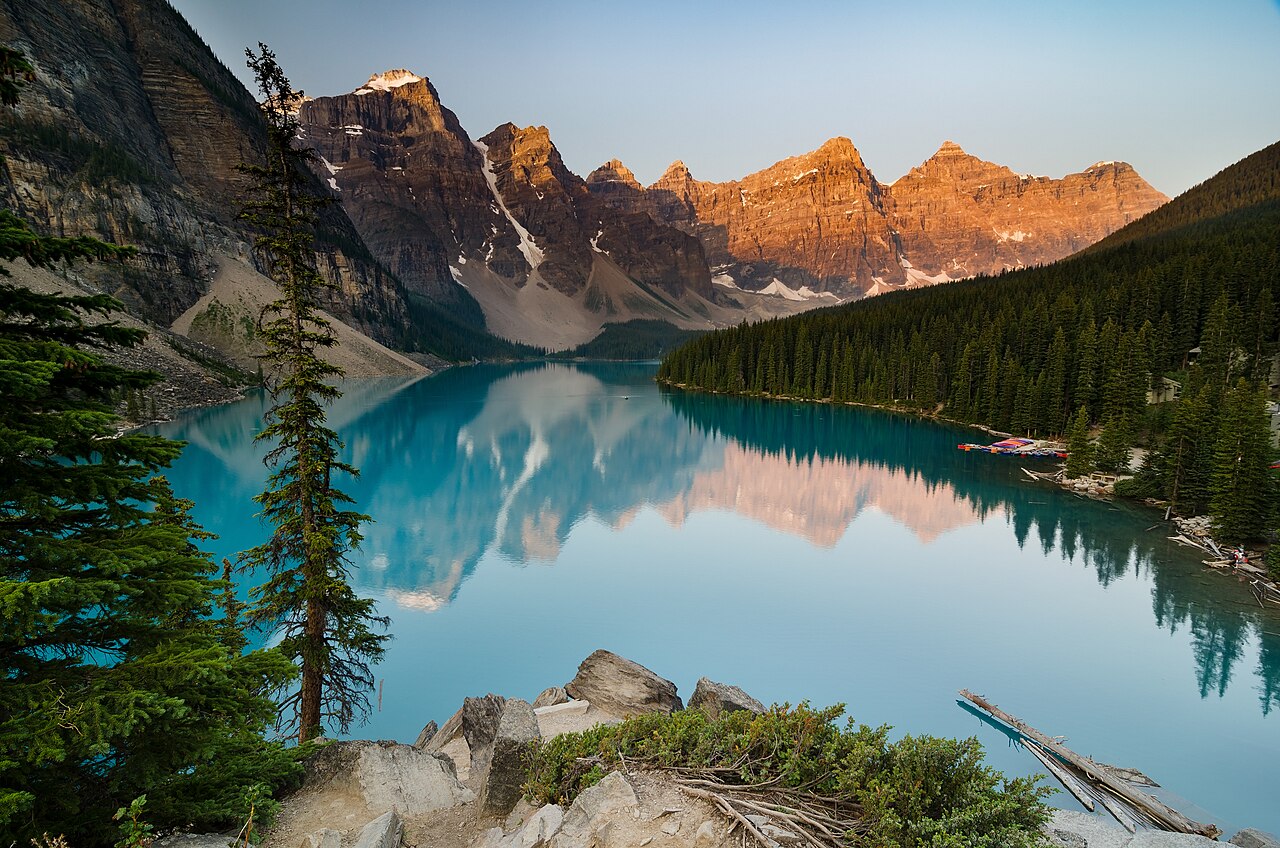
Choose Banff for a town base with useful transit, Canmore when its accommodation and atmosphere fit your wider trip, or Lake Louise when that end of the park is your main focus. None removes the need to plan lake access. Compare the complete day from your room to the activity and back, not just the room price or a straight-line distance.

For travelers choosing accommodation before a first or return Banff trip, especially those deciding whether to rent a car or divide the stay between two bases.
Banff suits a trip with several different kinds of day
Banff town gives you a practical base for riverside time, local outings and regional transit. If you want to leave some days undecided, staying near the stops you will use can be more useful than a room described as secluded. Check the actual walk from the hotel to the bus, especially with luggage.
The tradeoff is that a Lake Louise outing still involves a separate journey. Do not book a distant early activity simply because its name includes Banff. Compare the meeting point with your accommodation, then decide whether the transit schedule or a booked pickup makes that particular morning comfortable.
Canmore adds a commute, so price the whole stay
Canmore is outside Banff National Park, and Roam’s Route 3 links it with Banff. It can suit a trip that values a town stay and has room for the connection. Look at the property’s position within Canmore; an attractive room far from your intended stop changes the value of a car-free plan.
Compare room cost together with parking, fares, transfers and the time you will spend traveling. Do not assume Canmore is always cheaper after those costs. If most of your days start farther west, the extra movement may matter more than a saving. If the accommodation itself is part of the holiday, you may happily accept it.
Lake Louise village and lakeshore are not the same address
A listing in Lake Louise may mean the village, the lakeshore or somewhere else nearby. Check which one before imagining that you can step outside for an early lake view. Ask the property how guests reach the lake and whether any advertised shuttle needs a reservation or operates only on selected dates.
Staying in this part of the park can make sense when the lakes and nearby walks dominate your plans. It is less useful if you expect to return to Banff town repeatedly. Also separate your room booking from Moraine Lake access: an accommodation reservation does not automatically provide the specific transport arrangement you need.
Run your most complicated day through the timetable
Write down the day that matters most: hotel to bus stop, regional journey, activity, return journey and final walk to the room. Parks Canada’s Lake Louise transport guidance distinguishes its Park and Ride shuttle from Roam services. Confirm the correct departure point rather than treating every lake ticket as interchangeable.
Then try the same exercise for a late dinner or an early departure. If the plan works only by assuming a taxi will appear, price and confirm that option before booking the room. With a car, still check parking and restricted access; driving is useful flexibility, not a guarantee of reaching every lakeshore directly.
Change bases only when it improves more than one morning
A split stay can work when you have a genuine block of activities at each end. Keep the move itself light: check out, travel, leave bags where agreed and enjoy one manageable outing. Avoid pairing the change of hotel with a tightly timed lake booking unless the luggage and transport arrangements are already clear.
For a shorter trip, one base may be calmer even if it means a longer day out. Count packing, checkout, luggage storage and check-in as part of the move. Two hotels are worthwhile when they support the experience you want, not simply because a map makes them look conveniently spaced.
Ask questions that reveal the real location
Before paying, confirm the nearest usable transit stop, parking terms, luggage storage, late arrival arrangements and any property shuttle conditions. Check cancellation terms against the activities you are booking separately. If you need a kitchen, step-free access or a quiet room, ask directly rather than inferring those details from a scenic photograph.
Choose the base that makes your preferred ordinary day easy, not only the single biggest excursion. Someone who wants river walks and dinners in town may love Banff; someone focused on the lake area may prefer staying farther west. Your accommodation should support that preference instead of turning every morning into a transfer problem.
Explore the parks in this guide
Official sources & trip checks
Parks Canada: Getting around Banff ↗Parks Canada: Lake Louise and Moraine Lake transport ↗Roam Transit: Current schedules and routes ↗Sources checked October 25, 2026. Independently researched by Parkly; not a firsthand trip report. Route order, light preferences and pace are editorial suggestions. Check official conditions for your travel dates.
How we make recommendations ↗